Our ranges
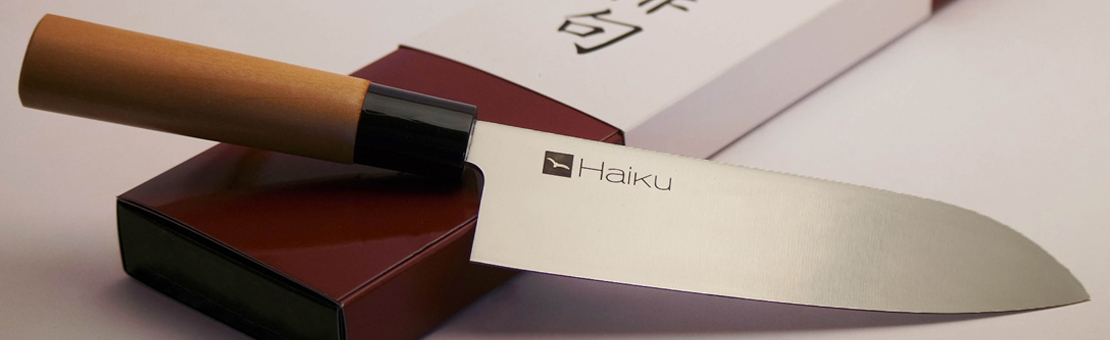
 Haiku Original
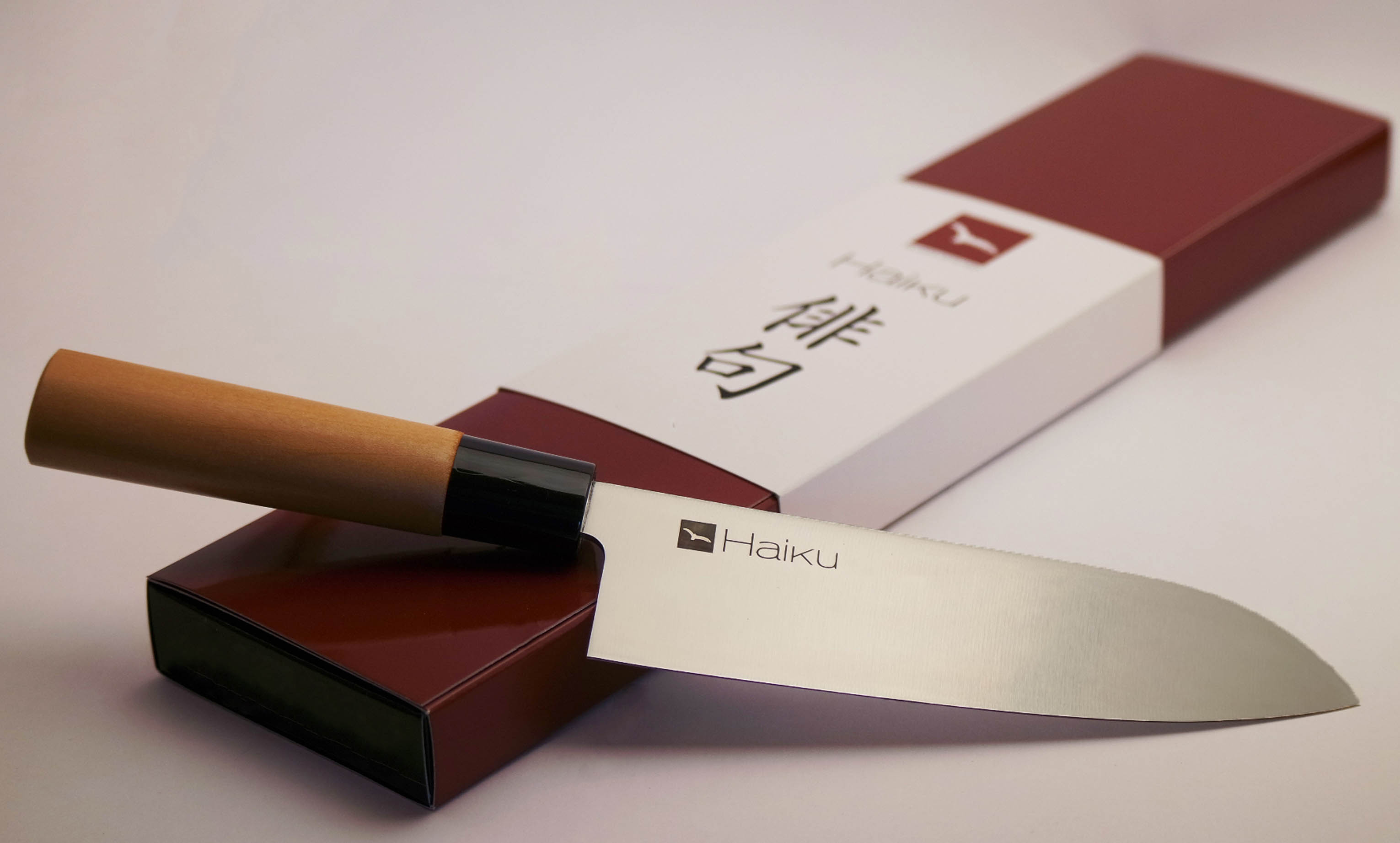
The Haiku Japanese knife was created in a small family-owned factory using high quality Japanese steel. A complex alchemy was used to ensure its resistance to corrosion.
When it arrived on the European market in the mid-1990s, it was an immediate success.
This old-fashioned knife has been adopted by all those who seek to combine a pleasant grip and an easy-to-sharpen edge. Zen-like balance and harmony, a simply authentic japanese knife !
 Haiku Home
The Haiku Home series offers a light cutting experience and excellent grip, typical of Japanese knives. This knife was designed to meet the expectations of moderate cooks, while still offering a common cutting quality.
Because the handles are not cemented, they are not intended for heavy use in professional kitchens. The handles of Haiku Home knives are made of the first, untreated, raw wood layers, an important cost factor less.
Haiku Home is the first Japanese knife sold in Europe. The history from which it draws its roots is immemorial in two ways, on a Japanese scale for its manufacturing and on a European scale for its marketing.
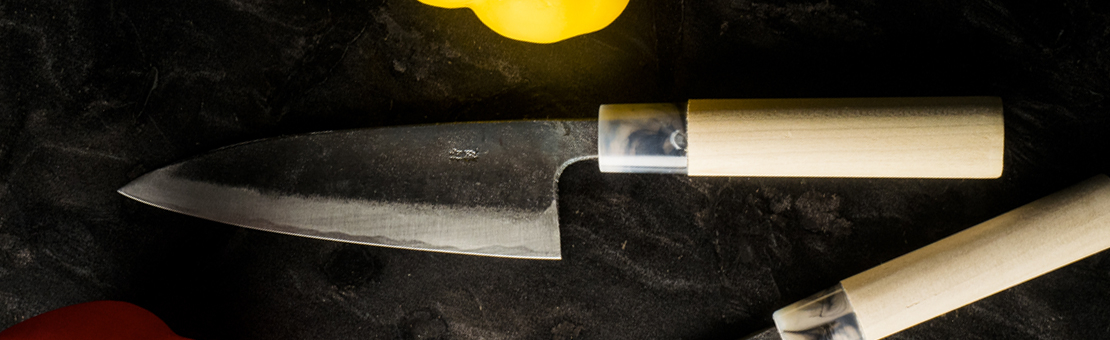
 Haiku Kurouchi
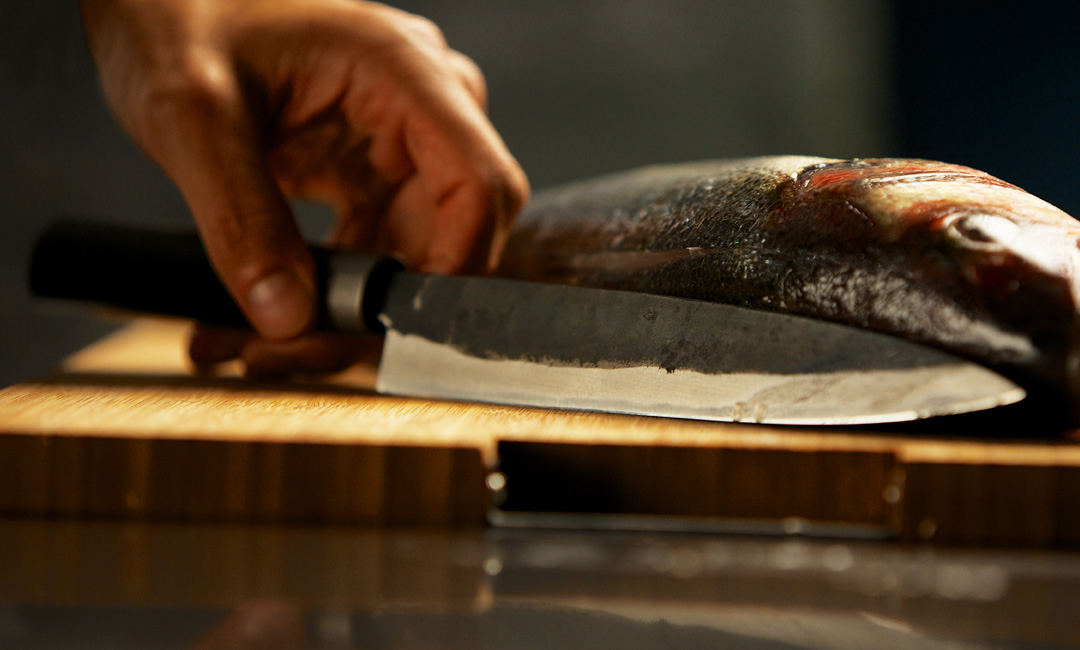
Kurouchi is derived from the transliteration of two untranslatable Japanese kanji evoking a rustique unpolished aspect. When the product appeared about twenty years ago it was the first of its kind, since then even in Japan the Latin term has become emblematic.
The handle is made of hardened wood and stained black. The ferule in steel fixed with a metal pin. It is an extreme mono-artisanat, each reference is made only by one person in particular, who does not make the others. The knife is forged freely, that is to say, without a mold, then put under the hammer.
This is the primitive knife, as it was imagined in the past, redesigned and revisited with modern performing steels (1,2 % carbon).
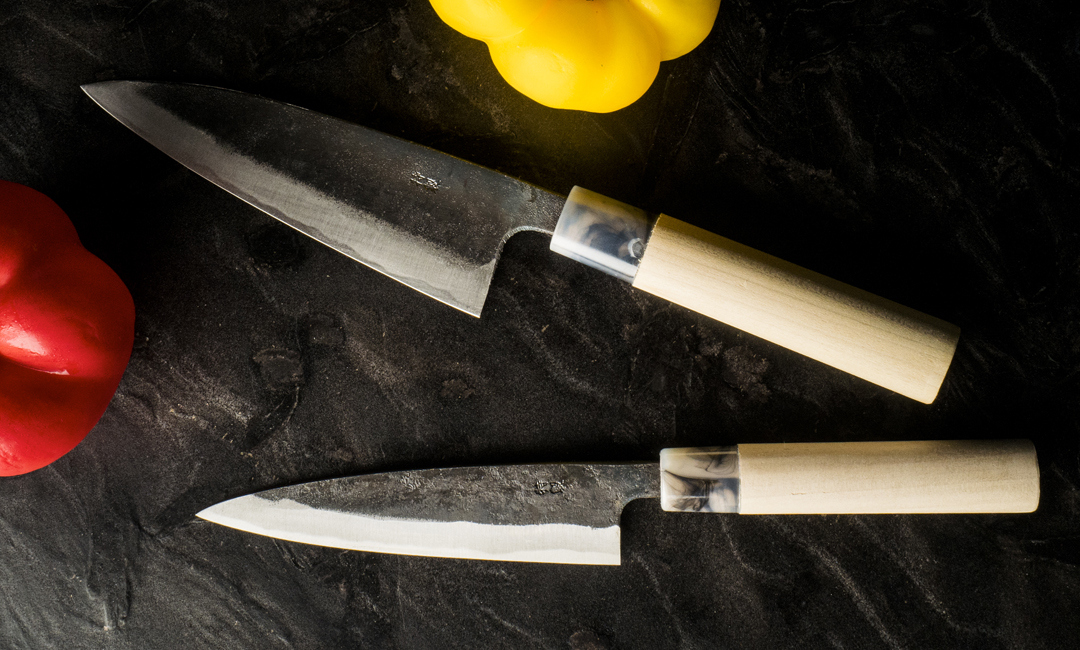 Haiku Ryoma Sakamoto
It is a japanese entry-level rooted in Tosa, Kochi prefecture, like the eponymous hero from whom it borrows its name in memory of the imprint he left on this island. Haiku Ryoma Sakamoto knives are raw forged. By raw forged we mean knives that remain unpolished.
This range has natural crude handles, not cemented to be exchanged if necessary. Plastic ferrule and standardized blade thickness instead of freely forged and of variable thickness like Haiku Kurouchi.
Haiku Ryoma Sakamoto is a short range of the 3 classic Japanese knives, Nakiri, Santoku, Utility.
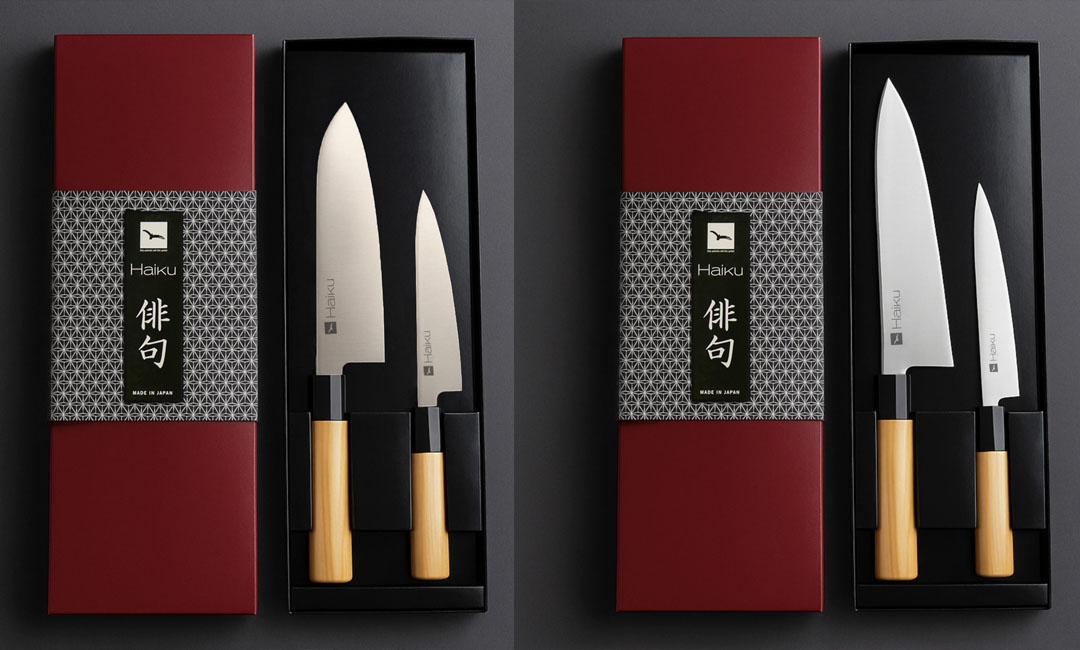 Haiku Sets
Take a dive into Japanese culinary art with Haiku knife sets. Combining traditional craftsmanship, cutting precision, and natural elegance, they offer the perfect balance between performance and authenticity in the kitchen.
Each set includes complementary blades to meet the essential needs of food preparation.
Affordable sets for small budgets and professionals!
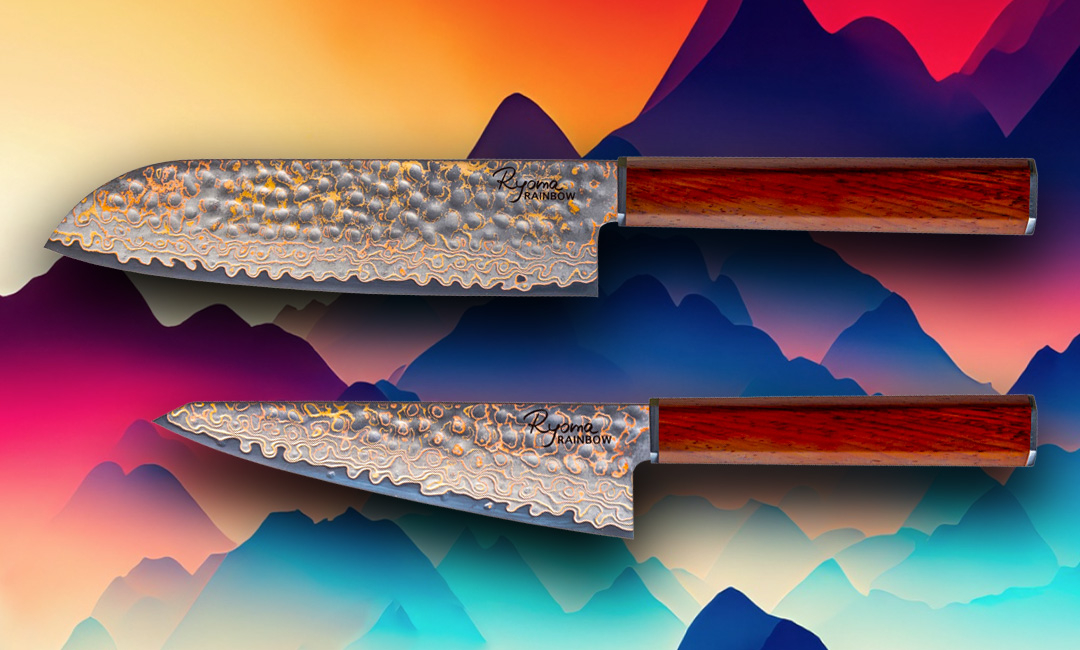 Ryoma Rainbow
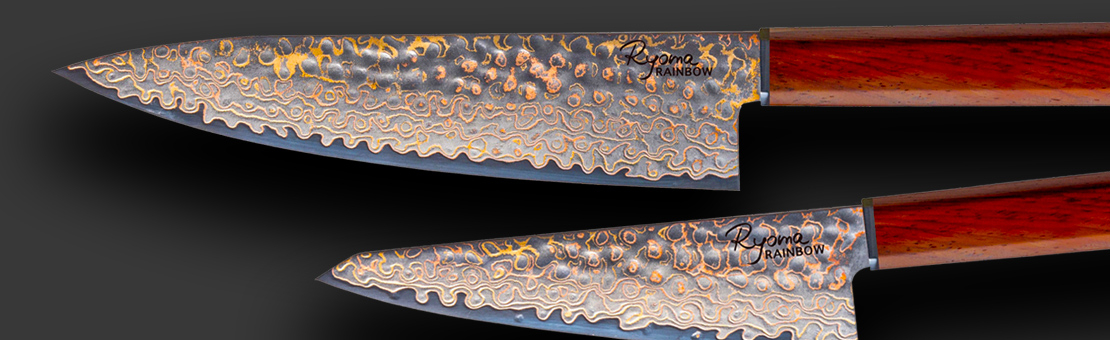
The Ryoma Rainbow range of kitchen knives features hammered blades in coloured damascus. The range is writing the history of Haiku International's new brand. A premium product where each material has been carefully chosen to offer this visual work of art, halfway between tradition and modernity.
The Japanese steel blades go along with a traditional octagonal handle made from rosewood. All presented in a box dedicated to each blade.
A fatal beauty with iridescent colours and a sharp edge that allow this range to capture even the sharpest of hearts.
 Ryoma Kurosan
Ryoma Kurosan black hammered blades. Its rough impression is enhanced by its high-carbon, three-layer damascened steel known as “hamon”. This visible wavy pattern is an ancestral Japanese technique found on the most prestigious samurai swords.
The blade is hand-mounted on a traditional octagonal walnut handle. Set with two metal rings, the signature of Ryoma kitchen knives.
Kurosan means “the black man” in Japanese from historical character Yasuke. A fitting name for a design that combines tradition and modernity.
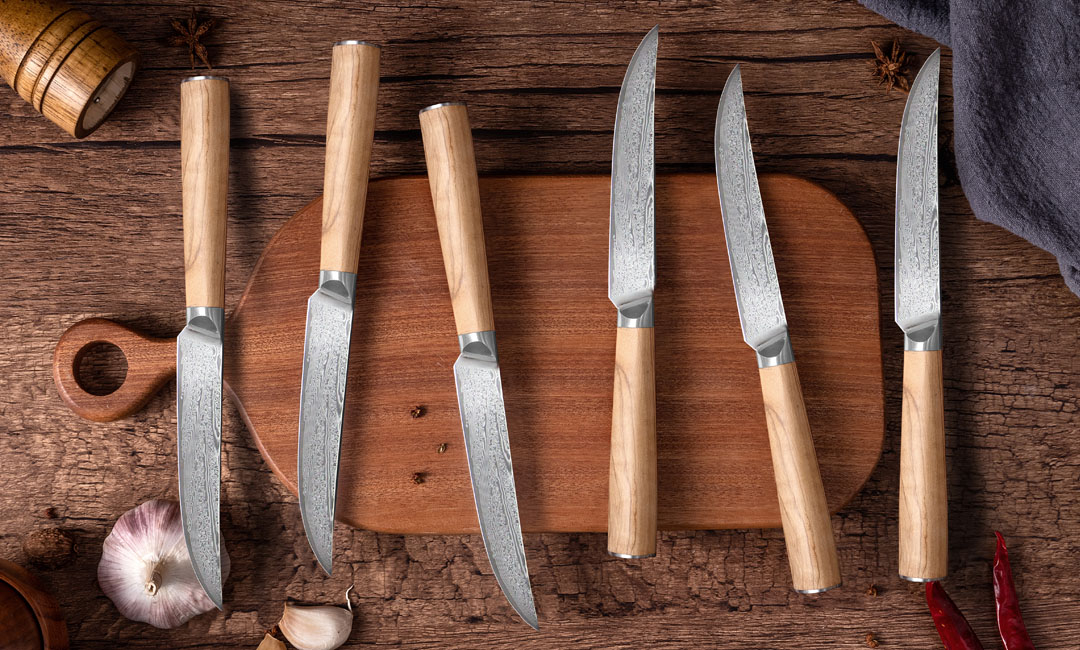 Ryoma steak knife
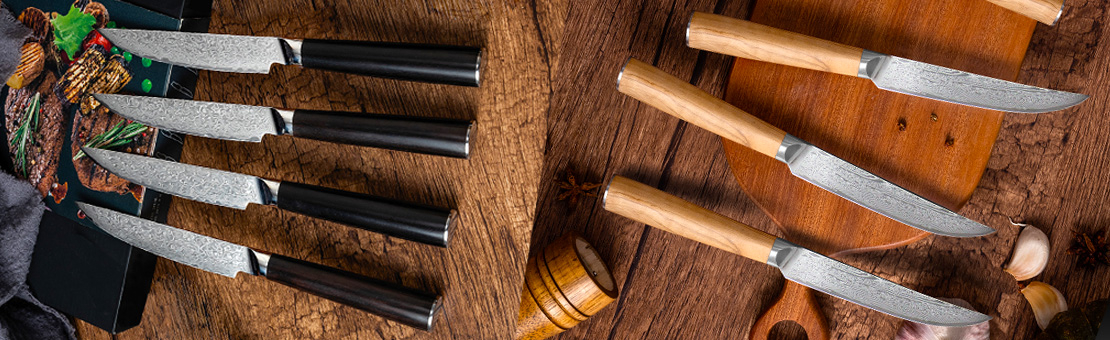
The beauty of Damascus with Ryoma steak knives to enhance your tables and discover the pleasure of cutting with sharp Japanese steel blades for unparalleled taste pleasure.
With a D-shape handle to keep them from rolling off tables and dirtying tablecloths, the Ryoma collections offer versions in black ebony or soft-touch Italian olive wood.
Discover them in sets of four or six in their storage box!
Haiku, the traditional Japanese knife representing an art and a culture.
Made in a small family-run factory from quality japanese steel with a complex alchemy for the stainless side, Haiku Japanese knife quickly conquered the european market in the mid 1990s. The pioneer of the old-fashioned japanese knife has been adopted by all those who seek a pleasant grip combined with perfect balance and a proven easy-to-sharpen edge.
Praise for simplicity. One of the reasons for the resounding success of Japanese craftsmen is their ability to reduce objects to their simplest form. Haiku, the poet knife, is a mythical representative of this natural skill and is available in several ranges, of which Haiku Original is the best known. The best layers of honoki wood with a protective treatment that develops a patina over time, give it a character that is highly prized by customers looking for authentic value for money. Honoki is a species of wood, Magnolia Hypoleuca, a non-coniferous tree that has been used for centuries to make Japanese sayas and swords, not to be confused with hinoki which is a cypress.
Zen balance and harmony, as underlined by the more relaxed grip than the hard wooden "pakka" handles. Honoki has the particularity of being relaxing in itself (in the past, bathtubs were made of this material to relax). The Ancients had already integrated these notions at the time of the samurai who, in addition to the grip, required a fixing system that does not generate vibration waves. In this spirit, the Haiku knife is stuck without a nail in a bamboo which holds the whole together, only a bamboo pin holds the ferrule. Thus the knife is protected from hygrometric variations that cause the rivets of synthetic handles to move. An ingenious construction.
The Haiku knife has all the qualities of the traditional Japanese knife in its design, manufacture and quality control.Haiku, the traditional japanese knife representing an art and a culture.